
Columbus winters have a particular rhythm to them. Rather than settling into one long, consistent cold stretch the way some northern climates do, Ohio tends to swing back and forth, with a hard freeze one week followed by a milder thaw the next, sometimes repeating this pattern several times before spring finally arrives for good. While most drivers think about this freeze thaw cycle in terms of potholes forming on roads like Broad Street or High Street, far fewer realize how much this same temperature swing pattern pushes car batteries toward failure faster than a steadier cold climate would.
Why Freeze Thaw Cycling Is Uniquely Hard On Batteries
A battery’s ability to deliver power depends on a chemical reaction that slows down significantly as temperatures drop. In a climate with one long, sustained cold season, a battery experiences a fairly predictable decline in performance that stays relatively consistent throughout winter. Columbus’s freeze thaw pattern is different, forcing a battery to repeatedly adjust between reduced cold weather performance and a partial recovery during milder stretches, only to be pushed back into reduced performance again once the next freeze arrives.
This repeated cycling creates more stress on a battery’s internal components than a steady cold winter would, since the battery is essentially being asked to handle repeated transitions rather than settling into one consistent operating condition. Over several winters, this pattern can accelerate the internal wear that eventually leads to a battery no longer holding a sufficient charge, sometimes catching drivers off guard because the battery seemed to be performing reasonably well just a few days earlier during a milder stretch.
How This Compounds With Age And Prior Wear
A battery that has already accumulated some wear from Columbus summers, since heat also accelerates battery degradation even though it gets less attention than cold weather failures, enters winter with less of a buffer to handle the added stress of freeze thaw cycling. This means a battery that might have comfortably lasted through a milder winter elsewhere can reach the end of its usable life considerably faster here, particularly once it has already been through a few Ohio winters with this repeated cycling pattern.
Older batteries, generally those approaching three to four years of age, are especially vulnerable to this compounding effect, since they have less reserve capacity to begin with and are more likely to reveal a sudden failure during one of the sharper freezes that typically follows a brief winter thaw.
Signs That A Replacement Is Coming
A few warning signs suggest a Columbus driver’s battery may be approaching failure due to this freeze thaw stress. A car that cranks noticeably slower than it used to, particularly right after a cold snap following a milder stretch, is one of the more common early indicators. Dimming headlights or interior lights during startup, a battery warning light on the dashboard, or a car that requires a jump start more than once during the same winter season are all signs that the battery’s capacity has likely declined to the point where a full failure is not far off.
If your car has already left you stranded with a no start situation, our guide on the top 10 reasons your car won’t start and how to get back on the road covers a range of causes, several of which become more likely once a battery has been through repeated freeze thaw stress over multiple Ohio winters.
Why Testing Beats Guessing
Visually, it is nearly impossible to tell how much life remains in a battery, since the outward appearance rarely changes even as internal capacity declines significantly. A proper battery test measures actual cranking performance and remaining capacity, giving a much clearer picture than simply guessing based on age or how the car seemed to start on any particular morning. This is especially useful heading into Columbus winters, since a battery that tests marginal in the fall is a strong candidate for proactive replacement before the freeze thaw cycling of a full winter has a chance to push it into complete failure.
Many drivers assume that because their car started fine yesterday, the battery must still be in good shape today, but this is exactly the kind of assumption that freeze thaw cycling tends to undermine. A battery can perform adequately during a mild stretch and then fail outright the very next morning once a sharp overnight freeze arrives, simply because the milder temperature the day before was masking a capacity that had already declined well below what a genuinely cold snap would demand.
Simple Habits That Help Extend Battery Life Here
Keeping battery terminals clean and free of corrosion helps maintain a solid connection, which matters more during a winter with repeated freeze thaw cycling than it would in a steadier climate, since each temperature swing places slightly more demand on the connection itself. Limiting unnecessary electrical drain, such as leaving lights on or running accessories with the engine off, helps preserve whatever capacity a battery has left, which becomes especially important once a battery is already showing signs of age.
Parking in a garage overnight when one is available also helps smooth out some of the temperature swing a battery experiences, since a garaged vehicle typically stays a bit warmer than one parked outdoors during a sharp overnight freeze. This is a small difference, but for a battery that is already on the older side, it can be enough to buy a few extra weeks or months before a full replacement becomes necessary.
Having your battery tested proactively each fall, before the first hard freeze arrives, gives you the chance to replace a marginal battery on your own schedule rather than discovering its failure during an inconvenient cold morning in the middle of a Columbus winter.
Why A Mobile Mechanic Fits Columbus’s Winter Reality
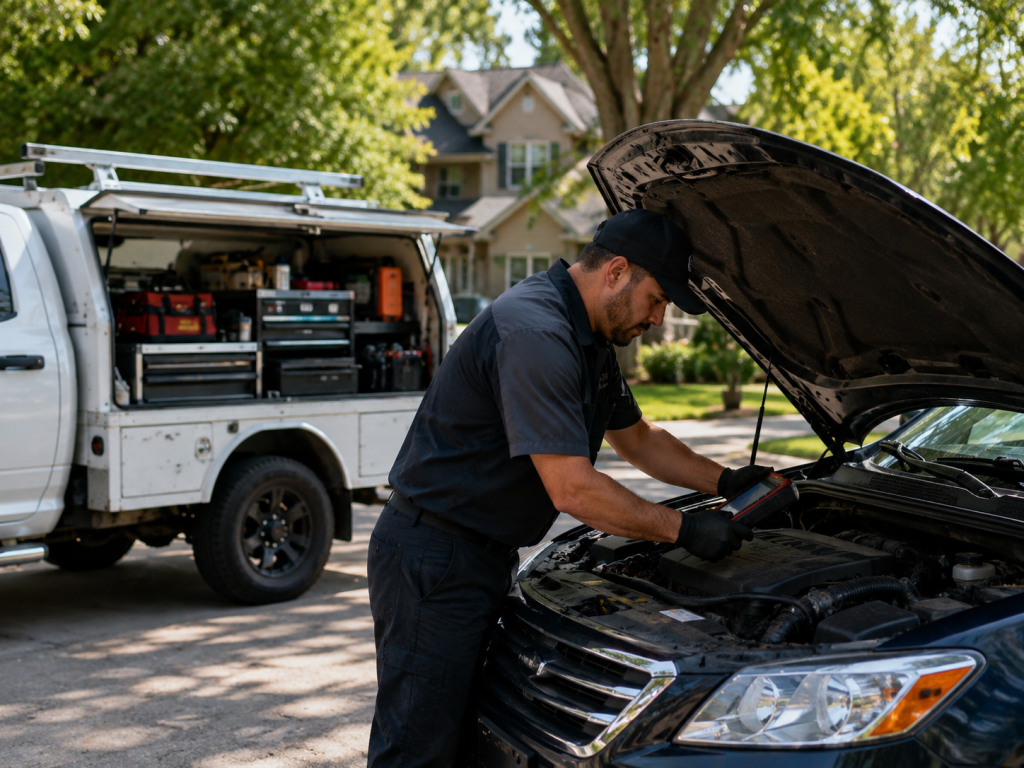
A dead battery rarely happens at a convenient time or location, and dealing with it during a Columbus cold snap is not something anyone looks forward to. A mobile mechanic can come to your home or workplace, test your battery’s actual condition, and replace it on the spot if needed, without requiring you to arrange a tow or wait for a shop appointment during the coldest part of the year.
We covered the broader advantages of this approach in our article on how mobile mechanics are changing the auto repair game in Columbus, which explains how convenience and quick response times come together, particularly valuable during a season when a dead battery can strike with very little warning.
Stay Ahead Of What Columbus Winters Do To Batteries
Ohio’s freeze thaw pattern is simply part of life in Columbus, and while it cannot be avoided, staying ahead of its effect on your battery is entirely within your control. Testing your battery proactively each fall, watching for early warning signs, and replacing an aging battery before it fails completely are all simple habits that keep you from being stranded during one of the year’s sharper cold snaps, whether that happens in your own driveway or in a parking lot somewhere across the city.
If it has been a while since your battery was tested, visit our homepage to learn more about our services, or reach out through our contact us page to schedule a visit at your home or office anywhere in the Columbus area.
A little proactive attention now can help your battery hold up against everything another Ohio freeze thaw winter is about to bring.